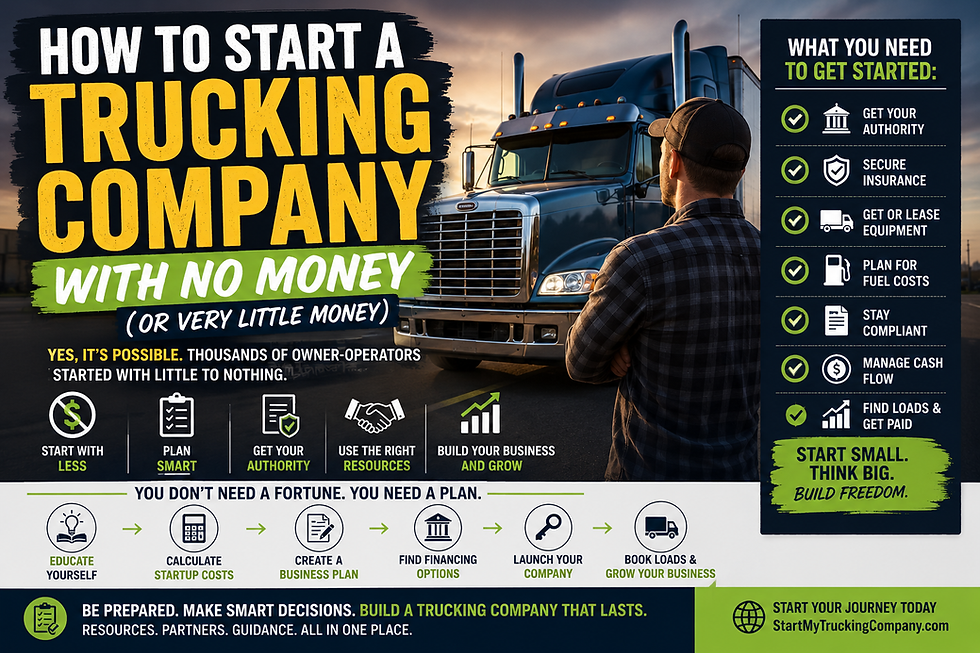
🚚 How to Start a Trucking Company With No Money (Or Very Little Money)
One of the most common questions future trucking company owners ask is:
"Can I start a trucking company with no money?"
The honest answer?
Not completely.
However, many successful trucking companies started with far less money than most people imagine.
The key is understanding which startup expenses are unavoidable, which expenses can be financed, and how to avoid costly mistakes during the startup process.
If you're motivated, willing to learn, and committed to building a business, you may be closer to starting a trucking company than you think.
💰 How To Start A Trucking Company With No Money
Every trucking company requires some level of investment.
You'll likely encounter expenses such as:
• Authority fees
• Insurance down payments
• Fuel
• Compliance requirements
• Business registration
• Equipment expenses
Even if you already own a truck, there will still be startup costs.
The goal isn't necessarily starting with zero dollars.
The goal is understanding how to start with the least amount of money possible while still setting yourself up for success.
🚛 The Biggest Startup Expense Is Usually Insurance
Many new trucking company owners focus on the truck.
In reality, insurance is often one of the largest startup expenses.
Factors that affect insurance costs include:
• Vehicle type
• Driving history
• Operating radius
• Commodities hauled
• Years in business
• Authority type
Understanding insurance requirements before buying equipment can save thousands of dollars and prevent unpleasant surprises.
📋 What Costs Can Be Financed?
Many new trucking companies finance or lease:
✅ Trucks
✅ Trailers
✅ Equipment
✅ Certain business expenses
Some carriers also utilize freight factoring after they begin hauling loads to improve cash flow.
This can help reduce the amount of working capital needed during the early stages of the business.
⛽ Don't Forget About Operating Capital
One of the biggest mistakes new trucking companies make is spending every dollar on startup costs.
Then the first fuel bill arrives.
Or the first repair.
Or the first insurance payment.
Operating capital is just as important as startup capital.
Before activating authority, ask yourself:
• How will fuel be paid for?
• What happens if the truck breaks down?
• How long can I operate before receiving payment for a load?
• Do I have a cash flow plan?
The companies that survive are often the companies that plan ahead.
⚠️ Common Mistakes New Trucking Companies Make
Many new owner-operators accidentally make the process harder by:
❌ Buying equipment before researching insurance
❌ Activating authority without a business plan
❌ Underestimating fuel costs
❌ Ignoring compliance requirements
❌ Assuming revenue starts immediately
The trucking industry rewards preparation.
📈 What If You Don't Have Much Money Right Now?
That doesn't mean your dream is over.
Many successful trucking company owners started by:
• Saving for a down payment
• Improving their credit profile
• Researching the startup process
• Building a business plan
• Learning the industry before launching
Preparation today can create opportunities tomorrow.
🚚 The Smart Way to Start a Trucking Company
If your goal is to start a trucking company with limited funds, focus on education before spending money.
Learn:
• How authority works
• Insurance requirements
• Startup costs
• Load boards
• Fuel programs
• Freight factoring
• Compliance obligations
The more you understand before launch, the fewer surprises you'll face.
🚀 Build Your Trucking Company the Right Way
Starting a trucking company isn't about having unlimited money.
It's about making informed decisions.
Many successful carriers started small and grew over time.
The goal is creating a plan that works for your situation and building a strong foundation from day one.
Start Here:
Explore Startup Resources:
Connect With Industry Partners:
Get Personalized Guidance:
Your trucking journey doesn't start when you buy a truck.
It starts when you create a plan.


Comments